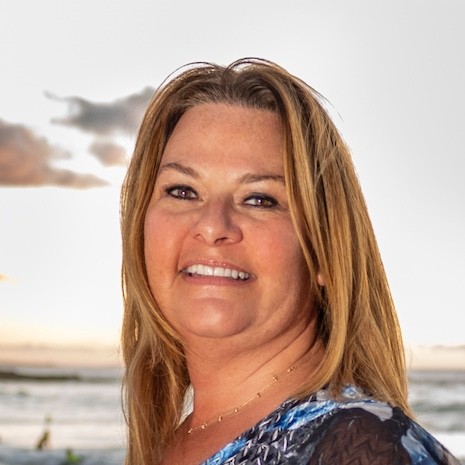
A conversation of practical applications and key learnings from AI development and deployment in clinical decision support and population health. This session will both highlight how AI can solve some of the most complex clinical and population health problems and describe the key role of non-medical drivers of health (NMDoH) data across the entire lifecycle of the AI journey. It will highlight and discuss the approach PCCI created in developing the Community Vulnerability Compass to capture community and individual voice at scale. Two specific AI examples will be discussed: one is for direct clinical decision augmentation at the point of care (the Parkland Trauma Mortality AI algorithm and program) and one is for a comprehensive AI-guided population health pediatric asthma program. The session will use these two examples to highlight how AI and machine learning are being integrated with clinical and NMDoH data and applied to those who serve the most vulnerable individuals and communities. It highlights the sound scientific principles followed in the design and development process and the predictable and prescriptive approach to test and implement solutions that keeps the clinician in full control with the utmost transparency and the patient at the center.
Your Vision is our mission
Visionaries

Steve Takacs
Executive Administrator
All About Homecare

Deepak Chebbi
Senior Enterprise Architect Business Solutions
Healthcare Services Corporation

Denise Helms
CEO/ Owner
Overture Homecare

Stosh Jarocki
Director Cyber Security Innovation
McEwen and Associates, Inc.

James Arnold
Enterprise Data Governance and AI Privacy Officer
CVS

Ginny Torno
Executive Director Innovation & IT
Houston Methodist

Kris Davis
Managing Partner/Owner
BrightStar Care

Fahad Kamal
Director of Finance And Operations
Baylor Medicine

Easwar Sundaram
Neurologist
Texas Institute for Neurological Disorders

Albert Karam
CIO
Parkland Center For Clinical Innovation

Shasta Turney
Director of Healthcare Solutions
Ping Identity

Steve Miff Ph.D.
President & CEO
PCCI

Armando Guzman
Chief Population Health Officer
Cantex Continuing Care Network

Steven Knight, RPH, PharmD
Director of Pharmacy Services
Methodist Health System

Eric Popiel
Cybersecurity Strategist and Evangelist, OpenText
OpenText

Antonio Marin
CIO
US Med-Equip

Nayan Patel
CIO
Upson Regional Medical Center

Mike Thompson
Director of Cloud and Security Architecture
Varonis

Doug Harper
President
Excelin Health

Pinaki Ghosh
Corporate Vice President
Prime Healthcare

Jerry Perez
Director, IT
UT Southwestern Medical Center

Antonio Marin
CIO
Northstar Memorial Group
Your Vision is our mission
Agenda
October 24, 20248:30 AM-9:00 AM
Registration
9:00 AM-9:30 AM
Morning Networking
9:30 AM-9:40 AM
Opening Remarks
9:40 AM-10:05 AM
Keynote
Healthcare AI: What’s AI Doing for You?
Panelists

Steve Miff Ph.D.
President & CEO
PCCI
10:10 AM-10:55 AM
Vision Keynote Panel
Managing The Margin
The healthcare industry is expected to undergo significant changes in 2024. Healthcare executives will need to make decisions and resource allocations concerning digital transformation, generative artificial intelligence, ESG, and margin pressures. Healthcare executives will face the challenge of adopting new technologies and business models while under sustained financial pressure. In terms of healthcare costs, estimates suggest that healthcare costs will rise by 7% in 2024, which is higher than the previous two years. This increase is attributed to continued labor shortages, drug price increases,
and new contracts between payers and providers. It is also worth noting that the cost of job-based health care coverage for 2024 is expected to rise at its fastest pace in years as inflation pervades insurance policies. Overall, the healthcare industry is expected to undergo significant changes in 2024, and healthcare executives will need to adapt to the new environment to ensure their organizations’ success.
Panelists

Doug Harper
President
Excelin Health

Pinaki Ghosh
Corporate Vice President
Prime Healthcare

Nayan Patel
CIO
Upson Regional Medical Center

Kris Davis
Managing Partner/Owner
BrightStar Care
11:00 AM-11:20 AM
Networking Break
11:20 AM-11:55 AM
Fireside Chat
Demystifying Data Security Platforms for Healthcare
In today's healthcare environment, organizations face relentless cyber threats and evolving regulations, making digital resilience more critical than ever. As a result, Data Security Platforms (DSPs), also known as Data Security Posture Management (DSPM), are expanding beyond traditional data protection and encryption. This session will explore the essential capabilities of modern DSPs, including data discovery, insights, remediation, policy enforcement, and data disposition. Additionally, we’ll examine the growing expectations for DSPs to manage data access governance through identity management, privileged access, behavior analytics, and threat intelligence. By analyzing how these elements work together, we’ll show how DSPs can provide a robust defense-in-depth strategy tailored for the healthcare industry. Attendees will learn how to leverage DSPs to ensure regulatory compliance, mitigate insider threats, defend against sophisticated cyberattacks, and enhance incident response. This holistic approach not only boosts security efficiency and risk management but also improves user experience, helping organizations adapt to the evolving digital challenges in healthcare.


Together with:

12:00 PM-12:45 PM
Panel
Impacts of AI On Patient Care
Artificial Intelligence (AI) is revolutionizing the healthcare field by enhancing diagnosis and treatment recommendations, improving patient engagement and adherence, and streamlining administrative activities. AI’s applications range from gathering and processing valuable patient data to programming surgical robots. This panel will delve into how AI is currently utilized in healthcare security, sharing practical applications and key insights from AI development and deployment. We’ll explore the risks associated with AI and cybersecurity in the healthcare sector and discuss mitigation strategies. Additionally, we’ll provide practical steps on implementing AI in your organization, highlighting benefits such as reduced expenses, enhanced efficiency, and improved accuracy. Join us to understand how AI is transforming healthcare diagnosis, improving decision-making processes, and driving innovative treatment solutions.
Chair

Steve Takacs
Executive Administrator
All About Homecare
Panelists
Albert Karam
CIO
Parkland Center For Clinical Innovation

Denise Helms
CEO/ Owner
Overture Homecare

Speaker
Mike Thompson
Director of Cloud and Security Architecture
Varonis
Together with:

12:50 PM-1:50 PM
Lunch & Networking
1:50 PM-2:35 PM
Panel
Identity Is The New Perimeter: Preventing Healthcare’s Next Big Cyberattack
For over five years, the healthcare industry has been the top target of cybercriminals, with
unauthorized access being the leading cause of data breaches. In this environment, digital
identity has become critical for reducing cyber threats, as every interaction—whether from a
human, device, or application—relies on dynamic identity and access management (IAM).
In this panel session, we will explore the latest healthcare security threats and identity
solutions tailored to combat them. As regulatory pressure from agencies like HHS and DOJ
mounts to address vulnerabilities and single points of failure, our discussion will highlight the
role of an identity-first security strategy in building resilience and trust within the increasingly
interconnected healthcare ecosystem. The discussion will include topics such as identity
verification, identity governance, passwordless authentication, and decentralized identity.
Chair


Stosh Jarocki
Director Cyber Security Innovation
McEwen and Associates, Inc.
Panelists

Speaker
Shasta Turney
Director of Healthcare Solutions
Ping Identity

James Arnold
Enterprise Data Governance and AI Privacy Officer
CVS
Together with:

2:40 PM-3:15 PM
Fireside Chat
Value Based Care – What’s the Strategy
Value-based payment and delivery transformation is not the future, it is the present. Successful health systems, hospitals, medical groups and other providers are those that seek to engage with members to improve their health and total cost of care, rather than simply providing episodic services when a patient is sick. Cost reduction is no longer primarily about per-visit cost, but rather total cost of care per member per month (PMPM). In addition to looking at cost from the payer perspective, cost reduction must also be viewed in terms of the member’s out-of-pocket expenses. Put another way, providers must aim to reduce the totality of medical costs for each member they manage, rather than focusing only on the costs for a member when they show up at a clinic or hospital
Panelists

Fahad Kamal
Director of Finance And Operations
Baylor Medicine

Armando Guzman
Chief Population Health Officer
Cantex Continuing Care Network
3:15 PM-3:30 PM
Networking Break
3:30 PM-4:15 PM
Panel
Improving Healthcare Outcomes- Diagnosis, Data, Patient Centric Care
Accuracy of diagnosis, data quality and patient centric care are the buzzwords around improving healthcare outcomes. Leveraging artificial intelligence with medical procedures to diagnose disease early, when there is the highest potential for impact. Data quality lives by accuracy, consistency, and relevancy. How can we improve data quality by reducing redundancy and decreasing medical errors? Patient centric care thrives if the partnership among practitioners, patients, and their families align with patients' wants, needs, and preferences. In this session, we will discuss what’s working and what’s not working, as we look to improve diagnosis, data quality and patient centric care.
Chair

Antonio Marin
CIO
US Med-Equip
Panelists

Ginny Torno
Executive Director Innovation & IT
Houston Methodist
Easwar Sundaram
Neurologist
Texas Institute for Neurological Disorders

Steven Knight, RPH, PharmD
Director of Pharmacy Services
Methodist Health System
4:15 PM-4:25 PM
Raffle Giveaway & Closing Remarks
4:30 PM-5:30 PM
Cocktail Hour





Don’t take our word for it
Heard In The Room
Partner
The process was very well organized by C-Vision. Perfect organization, honest and authentic speakers of high level.
Visionary
A very warm welcome and interesting speakers. I was very pleased to be among such a dynamic group.
Partner
I love the engaging format of the councils. Very high level discussions and never a sales pitch. The C-Vision staff members are amazing.
Partner
Thoughtful discussion among experienced leaders regarding current challenges and complexities, and valuable exchange of pragmatic approaches and best practices. Well organized and facilitated.

Visionary
C-vision's events combine relevant topics with a suitable audience. I found great value at my last attendance, and would definitely consider upcoming events.

Partner
Intimate, immersive experiences provided by a group of individuals always available to support our needs. Fantastic organization and very high-level executives. The promise was delivered!

Visionary
C-Vision laid out an articulate plan for us to be much more targeted, presented a stronger ROI and on top have come through with the Results they Promised. They really have become an adjunct "team for hire" building trust with us all along the way. There is no second guessing on this relationship and consistently over-deliver. My kind of Partner.

Partner
C-Vision was really professional, responsive, listened and are very thoughtful in their approach. They are very high touch and truly care about the customer and end result. Our speakers were impressed with the format, and who they brought to the table.